|
Updates shared at 2024 EULAR Congress may help 'better manage' SSc care by Marisa Wexler, MS | June 25, 2024  Treatment with Letairis (ambrisentan) — approved to treat pulmonary arterial hypertension (PAH), a common complication of systemic sclerosis (SSc) — may help prevent the development of PAH, or high blood pressure in the arteries of the lungs, in people with SSc.
That’s according to new data from SSc patients who completed the Phase 2 EDITA clinical trial (NCT02290613), which tested Letairis against a placebo, and who then continued their assigned regimen over a longer period. These results, along with positive data from the Phase 2 AST-MOMA trial (NCT01895244) — which evaluated a reduced-toxicity regimen of stem cell transplant in SSc patients — were presented at the 2024 European Alliance of Associations for Rheumatology (EULAR) Congress, held earlier this month in Vienna. “Taken together, these new findings could have an important bearing on the current standard of care for patients with SSc,” the alliance stated in a press release. Overall, EULAR stated that “new, strong evidence is now available to help better manage patients with this life-threatening condition,” noting, however, that “gaps remain.” Therapy is designed to block PAI-1, a mediator of inflammation, fibrosis by Patricia Inácio, PhD | June 18, 2024  The first healthy volunteers have been dosed in a Phase 1 clinical study that’s evaluating MDI-2517, a small molecule candidate to treat scleroderma and interstitial lung disease (ILD), which occurs when the lungs become scarred.
According to developers MDI Therapeutics, MDI-2517 is a potent blocker of plasminogen activator inhibitor-1 (PAI-1), a protein and key mediator of inflammation and fibrosis, or tissue scarring and thickening. “Based on comprehensive preclinical studies, this first in-human study of MDI-2517 will inform continued development of our novel, proprietary compound for the potential treatment of systemic sclerosis and interstitial lung disease, conditions where disability is significant and survival rates are poor,” Mark Weinberg, MD, chief medical officer at MDI Therapeutics, said in a company press release. In scleroderma, a self-reactive immune system causes fibrosis in the skin and possibly in internal organs, including the heart, kidney, lungs, and digestive tract. The disease is thought to develop due to a combination of genetic and environmental factors, resulting in the attack of body tissues by so-called autoantibodies. A Phase 2 trial will explore effect of AM1476 on skin thickness, lung function by Andrea Lobo, PhD | February 6, 2024  AM1476, AnaMar’s investigational anti-fibrotic medication, has been granted orphan drug status by the U.S. Food and Drug Administration (FDA) and the European Medicines Agency (EMA) for treating scleroderma.
To get this designation, a medication must be intended to treat a life-threatening rare disease that affects fewer than five in 100,000 people in Europe or under 200,000 people in the U.S. The designation provides certain incentives, including regulatory fee reductions and the potential for extensive market exclusivity — seven years in the U.S. and 10 in the European Union — if approved. The company plans a Phase 2 clinical trial to evaluate the treatment in people with scleroderma and interstitial lung disease (ILD), a group of diseases marked by lung scarring. The study will evaluate AM1476’s effects on skin thickness and lung function in 60 patients with diffuse cutaneous scleroderma and ILD over a year. “This is a significant milestone and underscores the significant unmet need for novel medicines to prevent, heal, and slow organ scarring from fibrotic diseases, which are often progressive and can have a poor prognosis,” Ulf Ljungberg, PhD, AnaMar’s CEO, said in a company press release. Scleroderma, also known as systemic sclerosis, is marked by inflammation and fibrosis, or uncontrolled tissue hardening and scarring, in the skin and even the heart, kidneys, and lungs. Up to 80% of people with SSc may develop ILD, which leads to reduced lung function and breathing problems. Cabaletta Bio developing CAR T-cell therapy for other autoimmune conditions by Marisa Wexler, MS | January 9, 2024  The U.S. Food and Drug Administration (FDA) has granted fast track designation to the cell therapy CABA-201 for organ dysfunction in people with scleroderma.
The agency also granted CABA-201 fast track status to reduce disease activity in people with dermatomyositis, another rare disorder that’s marked by muscle weakness and skin rash. The FDA had previously given CABA-201 fast track designation as a potential treatment for lupus. “The additional Fast Track Designations for CABA-201 … provide the opportunity for expedited development and review of CABA-201 for the treatment of these autoimmune indications where there is a significant unmet need, despite currently available therapies,” David Chang, MD, chief medical officer at Cabaletta Bio, which is developing CABA-201, said in a company press release.  Kedron-Wavell Services Club has generously provided a community donation of $300 for the cost of room hire for our event with Associate Professor Tony Kenna in September.
Generous donations such as this from #kw allows Scleroderma Queensland to raise such important funds for much-needed research and awareness. THANK YOU AGAIN to Kedron-Wavell Services Club. We gratefully acknowledge their support. #KW #KedronWavell #eventsatkw https://kedron-wavell.com.au/  About 2% of people with scleroderma are positive for more than one disease-associated antibody that targets tissues, causing damaging inflammation, according to a new study.
Results suggest that certain antibody combinations may be associated with distinct clinical features.  Variants of immune-regulating human leukocyte antigen (HLA) genes were associated with the risk of systemic scleroderma, subtypes of the condition, and the presence of self-reactive antibodies, a large-scale genetic analysis showed.
These findings underscored the genetic contribution to the disease and support future investigations into immunological susceptibility and external environmental stimuli that trigger autoimmunity in people with systemic scleroderma, the researchers noted.  Join us on Saturday 25 June 2022 for our Annual Scleroderma Seminar.
Our annual seminar is a wonderful opportunity to come together to hear from guest speakers, learn from each other and enjoy support and friendship. Date Saturday 25 June 2022 Time 8.30am - 3.30pm Venue Kallangur Community Hall 1480 Anzac Avenue Kallangur QLD 4503 Cost $25 Financial Members, $30 Non-Financial Members  Will you Snuggle Up for Scleroderma Australia and help raise funds for a specialist scleroderma nurse?
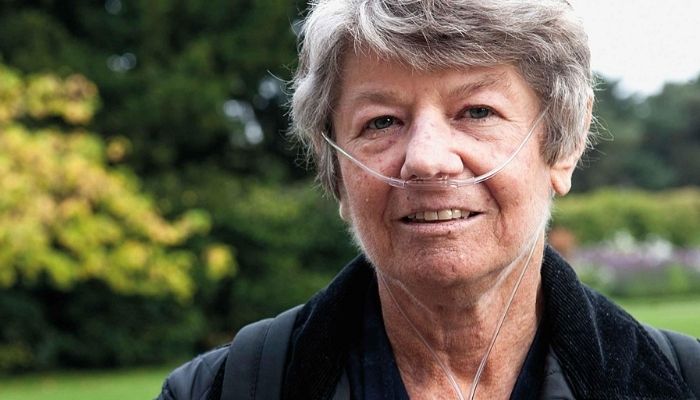 Scleroderma symptoms can vary greatly from person to person, however, up to half of all scleroderma patients also develop lung problems.
|

Scleroderma Association of Queensland
©Scleroderma Association of Queensland. All rights reserved. Website by Grey and Grey.